
How Air Blade Hand Dryers Improve Washroom Hygiene
Air blade hand dryers use concentrated, high-speed air to remove water quickly and with minimal contact, shortening the time hands remain moist and lowering the risk of bacterial transfer. This article summarises the main advantages and the operational principles that make air blade systems a practical choice for commercial washrooms.
It also notes how Velo Hand Dryers, a New Zealand supplier of commercial hand drying solutions, aligns product design with these hygiene and efficiency objectives.
Key Benefits
Air blade hand dryers bring measurable benefits for hygiene, speed and operational cleanliness.
Hygienic Operation : Touchless drying limits physical contact and reduces cross-contamination.
HEPA Filtration : Many units include HEPA filters to capture most airborne particles before they reach users' hands.
Fast Drying Time : High-velocity airflow dries hands rapidly, reducing moisture that supports bacterial survival.
These characteristics make air blade dryers suitable where hygiene and throughput are priorities.
Velo Hand Dryers supplies a range of air blade products suitable for varied commercial settings; for compact installations see the thin hand dryers from Velo.
Technical Insights
The core technology is a narrow, powerful airstream that physically removes water from skin and is supported by robust mechanical and electrical design.
High-Speed Air Delivery System : Concentrated airflow displaces water efficiently for fast, repeatable drying.
Durable Construction : Commercial-grade materials and finishes withstand frequent use.
Water-Resistant Electronics : Sealed or protected electronics reduce moisture-related failures in humid washrooms.
These technical choices underpin reliability and sustained hygienic performance.
Impact on Cleanliness and User Experience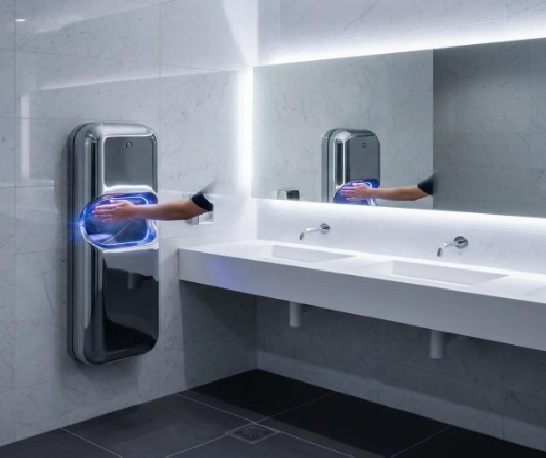
Air blade dryers reduce surface moisture and slip risk, increase user throughput, and support consistent hand hygiene while contributing to a tidy appearance.
Modern designs also help maintain a professional washroom aesthetic.
What Are Air Blade Hand Dryers and How Do They Enhance Hygiene?
Air blade dryers apply high-speed, filtered air to remove water with minimal contact, combining touchless operation with filtration to limit contamination.
Air Filtration : Filters remove particulates so the drying air is cleaner.
High-Speed Drying : Rapid airflow reduces wetness and the window for bacterial growth.
Antibacterial Materials : Surfaces and finishes can resist microbial buildup.
Together these features offer a hygienic alternative to many traditional drying methods.
How Does Air Blade Technology Work to Reduce Bacteria?
By physically removing water and supplying filtered, contact-free airflow, air blade technology reduces conditions that favour bacteria and limits touchpoints.
High-Speed Airflow : Blows water off the skin rather than relying on evaporation alone.
HEPA Filters : Capture airborne contaminants before they are directed at hands.
Touchless Operation : Eliminates the need to touch dispensers, lowering the chance of transfer.
These mechanisms explain the effectiveness of air blade dryers for washroom hygiene.
What Makes Velo's Air Blade Hand Dryers Suitable for Commercial Washrooms?
Velo designs emphasise hygiene, durability and efficient performance to meet the demands of high-traffic sites.
Hygienic Design : Minimises maintenance touchpoints and cross-contamination.
Fast Drying Times : Keeps queues moving in busy washrooms.
Energy Efficiency : Low-power operation lowers running costs while preserving drying speed.
These attributes make Velo units a practical option for businesses focused on cleanliness and reliability.
What Are the Hygiene Benefits of Using Air Blade Hand Dryers?
Key hygiene benefits include reduced hand moisture, fewer surface contacts and cleaner washroom surfaces.
Reduction of Bacteria on Hands : Removing moisture limits a primary medium for bacterial survival.
Comparison to Traditional Drying Methods : Air drying cuts waste and touchpoints compared with paper towels.
Impact on Washroom Cleanliness : Less water on surfaces reduces cleaning needs and slip hazards.
These points support air blade systems as part of a broader hygiene strategy.
How Do Air Blade Dryers Reduce Bacterial Spread Compared to Paper Towels?
Compared with paper towels, air blade dryers limit contact, use filtered air, and reduce waste that can harbour contaminants.
Minimized Cross-Contamination : Touchless operation lowers transfer between users.
HEPA Filters : Help ensure the drying air is not a source of contamination.
Less Waste : Eliminates litter and disposal-related hygiene issues.
Research has investigated comparative effectiveness between hand‑drying methods for reducing bacterial presence on hands.
Warm Air Dryer vs. Paper Towel: Bacterial Removal Efficiency
Objective: To evaluate warm air and paper towel drying for removing bacteria from washed hands. Methods: After hands were washed with non‑antibacterial soap, they were dried using warm air with and without ultraviolet light, while being rubbed or held stationary, or with paper towels. Each method was performed as a randomized trial using 30 hands. Results: Log colony‑forming units (CFU) on palms and fingers increased significantly when hands were dried with warm air while being rubbed for 15 seconds (P < .001), and many bacteria remained at 30 seconds without ultraviolet light (P < .001). Holding hands stationary while drying significantly decreased log CFU on palms, fingers, and fingertips (P < .01 or < .001). Efficiency of hand drying for removing bacteria from washed hands: comparison of paper towel drying with warm air drying, 2005.
What Role Does Touchless Drying Play in Washroom Hygiene?
Touchless drying reduces direct contact with fixtures and surfaces, thereby lowering opportunities for germ transfer and supporting infection-control measures.
Reduced Germ Transfer : Limits direct contact between hands and dispensers or surfaces.
Rapid Drying : Shorter wet times reduce bacterial risk.
HEPA Filters : Help maintain hygienic drying air.
Integrating touchless technology into air blade dryers contributes materially to overall washroom hygiene.
How Do Air Blade Hand Dryers Offer Energy Efficiency and Cost Savings?
Air blade hand dryers reduce energy use per dry and remove ongoing paper-towel costs, lowering total cost of ownership for many facilities.
Lower Energy Consumption : Efficient motors and airflow reduce power use.
Reduced Paper Towel Use : Eliminates a recurring consumable expense.
Long-Term Financial Benefits : Energy and consumable savings improve lifecycle costs.
These economic factors support specifying air blade dryers in commercial washrooms.
What Are the Energy Consumption Advantages of Velo Hand Dryers?
Velo models focus on lower wattage and optimized airflow to balance performance and energy use.
Lower Wattage : Designed to operate efficiently at reduced power.
Significant Energy Savings : Optimised components lower cumulative energy use.
Quick Drying Times : Maintains speed while reducing energy per dry.
These characteristics make Velo units cost-effective for high-use environments.
How Does Energy Efficiency Translate to Long-Term Business Savings?
Lower utility consumption and elimination of paper-towel expenses produce measurable savings over a product's lifecycle.
Annual Savings : Reduced energy costs lower annual operating expenses.
Elimination of Paper Towel Expenses : Removes purchase and disposal costs.
Improved Operational Efficiency : Faster drying improves user flow in busy washrooms.
Together, these benefits support the business case for efficient hand dryers.
What Maintenance Practices Ensure Optimal Hygiene and Durability?
Regular cleaning, filter checks and inspections maintain hygiene and prolong equipment life.
Regular Cleaning Schedule : Routine surface cleaning prevents build-up.
Necessary Tools for Maintenance : Use manufacturer-recommended cleaners and tools.
Specific Procedures for Upkeep : Follow manufacturer guidance for inspections and filter replacement.
Adhering to recommended maintenance preserves hygiene compliance and reliability.
How Often Should Air Blade Hand Dryers Be Maintained for Hygiene Compliance?
Maintenance cadence should reflect usage; daily checks, weekly cleaning and monthly inspections are a practical baseline for many sites.
Daily, Weekly, and Monthly Maintenance Tasks : Implement a clear schedule of checks and cleanings.
Importance of Regular Inspections : Inspections catch issues before they affect hygiene or performance.
Impact on Hygiene Compliance : Consistent upkeep helps meet hygiene standards.
A straightforward checklist ensures units remain compliant and operational.
What Certifications and Warranties Support Product Reliability?
Look for independent safety and environmental certifications and clear warranty terms when specifying commercial units.
CE Certification for Safety Standards : Confirms adherence to relevant safety requirements.
RoHS Compliance for Hazardous Substances : Indicates restriction of hazardous materials.
Warranty Terms for Product Reliability : Warranties offer assurance on performance and service.
Such credentials and warranty conditions are important when assessing long-term reliability.
For high-traffic commercial washrooms, the Big Flow hand dryers offer robust performance and quick drying times.
Conclusion
Air blade hand dryers offer clear hygiene, user-experience and cost advantages through rapid, touchless drying, filtration and reduced waste. Specifying Velo's hand dryers can help businesses improve washroom cleanliness and achieve operational efficiencies while reducing ongoing consumable and energy costs.