
Top Benefits of Installing Airblade Tap Hand Dryers
Commercial washrooms require reliable hygiene and operational efficiency. Airblade Tap Hand Dryers combine tap and drying functions in a single, touchless unit to streamline user flow and reduce surface contact. This article summarises the principal benefits—hygiene performance, energy efficiency, installation considerations and sustainability—so facilities managers can assess suitability for their sites.
What Are the Key Hygiene Benefits of Airblade Tap Hand Dryers?
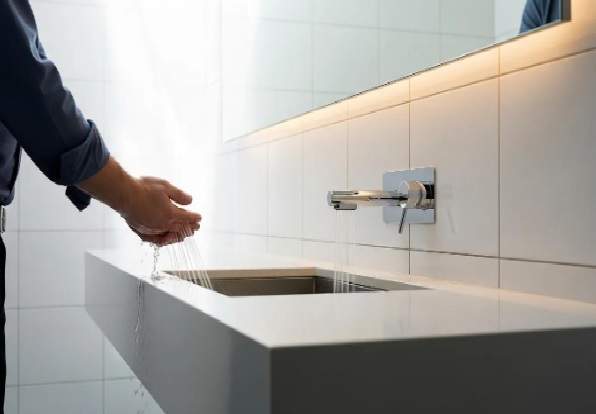
Airblade Tap Hand Dryers improve washroom hygiene by eliminating shared contact points and reducing opportunities for cross-contamination. The integrated, touchless design supports compliance with health standards and removes the need for paper towels, which are a known vector for litter and microbial transfer.
How Does Touchless Technology Improve Washroom Hygiene?
Touchless operation limits physical contact with fittings and surfaces, lowering the risk of germ transmission. High‑velocity airflow dries hands rapidly and reduces residual moisture, while HEPA filtration ensures the air used for drying is filtered, supporting a cleaner washroom environment.
In What Ways Do Airblade Tap Hand Dryers Reduce Bacteria and Contamination?
These units reduce bacteria and contamination by combining three factors: removal of touch points, rapid drying to minimise moisture retention on skin, and elimination of paper towel waste that can accumulate and harbour microbes. Together these reduce germ transfer and maintain cleaner surfaces.
How Do Airblade Tap Hand Dryers Deliver Energy Efficiency and Cost Savings?
Engineered for energy efficiency and lower operating costs, Airblade Tap Hand Dryers can deliver up to 80% energy savings compared with many conventional hand-drying methods; robust construction and minimal maintenance further reduce lifecycle costs.
What Makes Airblade Tap Hand Dryers More Energy Efficient Than Traditional Dryers?
Energy efficiency stems from the unit's aerodynamic design and high‑speed air delivery, which dries hands quickly with shorter run times. Automatic sensors ensure operation only when needed, reducing energy use in high‑traffic washrooms.
How Can Businesses Benefit from Reduced Energy and Maintenance Costs?
Businesses can realise measurable savings through reduced paper towel expenditure—commonly estimated at $1,800 to $3,000 annually depending on usage—and lower maintenance demands. Reduced consumable costs and simplified upkeep contribute to a faster return on investment.
Independent research supports the economic and environmental advantages of replacing paper towels with electric hand dryers in public institutions.
Hand Dryer Sustainability: Economic & Environmental Impact
Public restrooms play an underrated role in waste generation and GHG emissions, especially if paper towels are used as the hand-drying method. The choice of the hand-drying method (i.e., paper towels vs. electrical hand dryers) also affects the economic balance of a public institution, involving costs for the purchase of hand-drying materials/apparatuses, energy and waste disposal. The present paper aims at evaluating the economic and environmental impact of the introduction of electrical hand dryers (alternative scenario) in place of paper towels (reference scenario) in a public building.
Environmental and economic sustainability in public contexts: the impact of hand-drying options on waste management, carbon emissions and operating costs, G Coller, 2021
What Are the Installation and Maintenance Considerations for Airblade Tap Hand Dryers?
Installation and maintenance are straightforward. Units are compatible with standard plumbing and electrical supplies, and routine servicing consists of simple inspections and filter checks to preserve performance and uptime.
What Is the Typical Installation Process and Associated Costs?
Typical installation requires wall mounting and connection to existing plumbing and electrical circuits. Installation time is usually short and, because of the integrated design, overall fit‑out costs are often lower than alternative multi‑component solutions.
How Is Maintenance Managed to Ensure Long-Term Performance?
Maintenance comprises regular visual inspections, removal of debris and periodic HEPA filter checks or replacements. Most daily and weekly tasks can be completed by in‑house staff; qualified service support is advised for major repairs to ensure continued reliability.
Why Choose Airblade Tap Hand Dryers for Sustainable and Hygienic Commercial Washrooms?
Airblade Tap Hand Dryers support sustainability objectives by reducing disposable waste and improving energy performance. Their integrated configuration is suitable for high‑traffic locations where consistent hygiene and efficient operation are required.
How Do These Hand Dryers Support Water and Energy Conservation Goals?
By combining washing and drying at a single station, these units reduce dependence on paper towels and the associated waste handling. Their low energy consumption and rapid drying cycles contribute to broader water and energy conservation targets.
What Certifications and Case Studies Demonstrate Their Reliability?
Airblade Tap Hand Dryers are supported by manufacturer documentation and case studies from commercial clients that demonstrate improved hygiene and reduced operating costs. These real‑world examples assist specifiers and facilities teams in evaluating performance outcomes.
The combination of touchless operation, HEPA filtration and energy‑efficient design supports both hygiene objectives and operational cost reduction in commercial washrooms.
For businesses seeking high-performance solutions, Bigflow hand dryers offer robust and efficient drying capabilities, suitable for busy commercial environments.
Moreover, thin hand dryers provide a compact, space‑saving option without compromising drying performance, appropriate for contemporary washroom layouts.
Conclusion
Installing Airblade Tap Hand Dryers enhances washroom hygiene, reduces operational costs and supports sustainability goals. Their touchless operation and HEPA filtration reduce contamination risk while efficient design lowers energy and consumable expenses. Selecting these units is a practical measure for organisations seeking reliable, high‑performance washroom solutions.